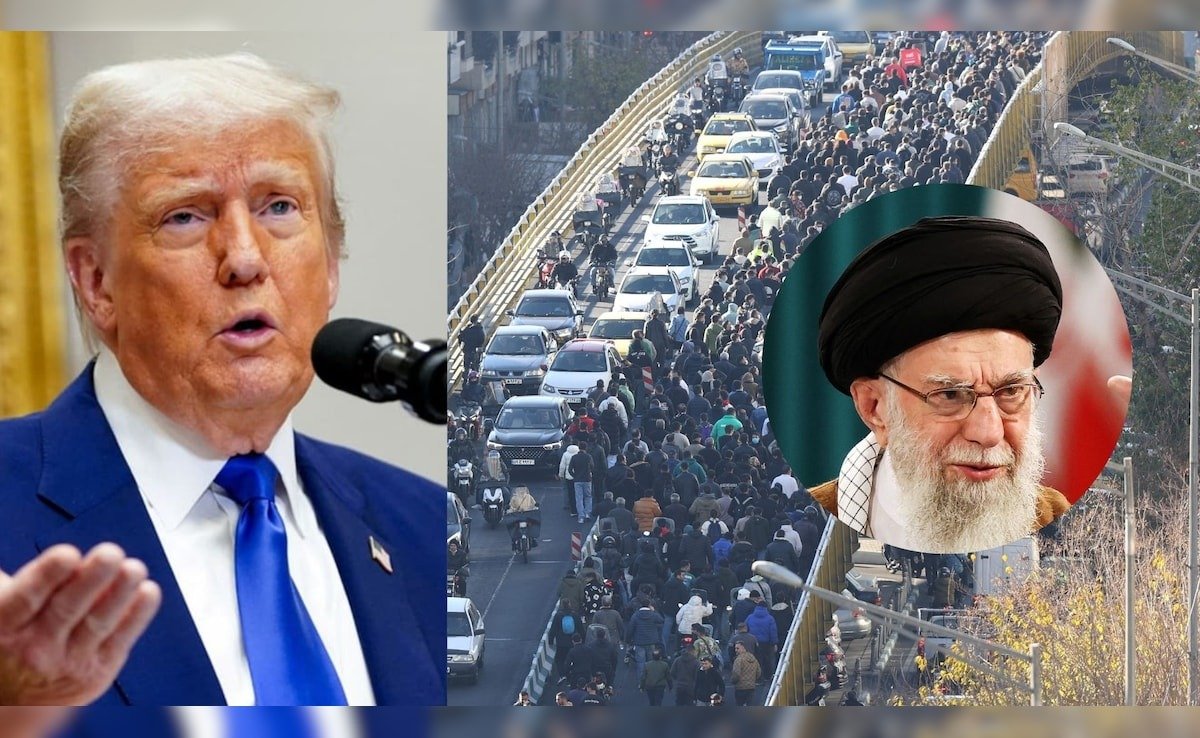
Tehran. Public anger in Iran has reached a boiling point amid severe economic hardship and runaway inflation. Anti-government protests that have continued for the past 10 days have now spread to 27 of the country’s 31 provinces. Violent clashes between protesters and security forces have reportedly claimed at least 35 lives so far, including demonstrators, children, and security personnel. According to human rights organizations, police and security forces are using force to control the situation, further escalating tensions.
The scale of the unrest is evident from the fact that rallies, road blockades, and strikes have been reported at more than 250 locations across 88 cities. Security has been significantly tightened in major cities, including the capital Tehran, as well as Isfahan and Babol. To curb violence and disrupt coordination among protesters, the government has imposed a complete shutdown of internet services in several areas, making it difficult to obtain accurate information about ground realities. More than 1,200 people have been detained so far, a large number of whom are students. Students in nearly 17 universities across the country have launched protests against the government.
The root cause of this latest wave of unrest lies in the devastating economic conditions that emerged after the 12-day war with Israel in June. The combined impact of the conflict and international sanctions has led to a complete collapse of Iran’s currency, the rial. In December, the exchange rate reportedly plunged to 1.4 million rials per US dollar, driving inflation and unemployment to levels that have severely burdened the general population. Protesters allege that instead of addressing basic economic issues, the government is resorting to repressive policies.
Meanwhile, Iran is also facing mounting pressure on the international front. US President Donald Trump has issued a strong warning, stating that if the killing of peaceful protesters does not stop, the United States will be compelled to intervene. Trump’s warning is being viewed as particularly significant in light of the recent detention of Venezuelan President Nicolás Maduro, a close ally of Iran, by US forces. This development has heightened concerns in Tehran, as fears grow that the US may now directly interfere in Iran’s internal affairs.
Iran’s current situation is being described as the most serious crisis since the 2022 hijab movement, and it has now emerged as a major challenge to the country’s ruling establishment.